La Salle University
La Salle University students learn the importance of real-world budgeting at the Financial Reality Fair
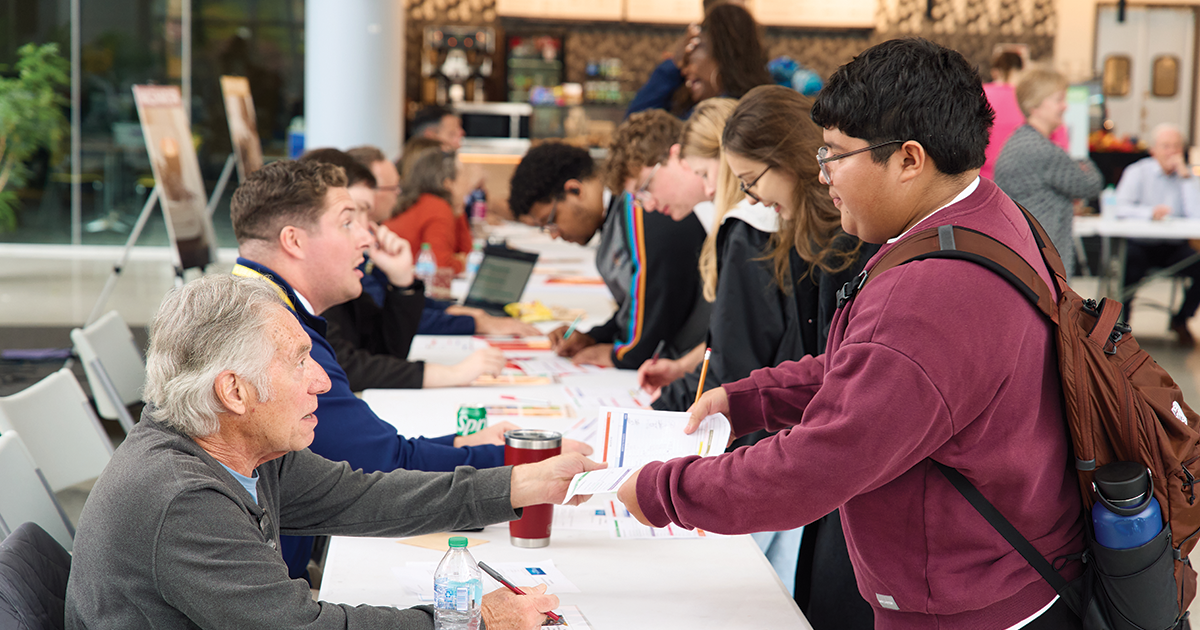
Financial literacy is an essential life skill, yet many college students enter adulthood without a clear understanding of how to manage their personal finances. At La Salle University, the Financial Literacy Club aims to bridge that gap through hands-on learning experiences like the annual Financial Reality Fair.
Anthony Vu, ’26, a senior majoring in finance and business systems and analytics, serves as the club’s president and plays a key role in organizing the event.
Vu described the Financial Reality Fair as a practical simulation designed to help students test their budgeting and money management skills.
“To me, it’s really like putting students’ money and budgeting skills to the test,” Vu explained. “They’re assigned a career with a salary and have to make real-life financial decisions about housing, transportation, food, and other expenses like streaming services or gym memberships.”
The Fair allows students to see how different lifestyle choices affect their financial stability and helps them understand the challenges of managing income and expenses after graduation.
Vu first experienced the Fair as a freshman and has participated every year since. The Financial Reality Fair has been running for a few years, he said, and turnout is always good. Volunteers and students at the event have told him they take a lot away from the experience. The “reality wheel” is one of Vu’s favorite things about the Fair.
“My favorite part is at the end when you spin the wheel—it’s kind of like the reality of life,” he shared. “Some days, you might leave the house, and your car breaks down. It shows how something small, like a $200 repair, can really affect your finances.”
A lot of our events attract business majors, but really, the club is for everyone—no matter what you do in life, you have to deal with money.
Anthony Vu, ’26
For many participants, the most eye-opening moment comes from realizing the long-term impact of loans.
“The loans component surprises a lot of people,” Vu noted. “When they see how much they owe in student debt or car payments, and how interest adds up over time, it really makes them think differently about money.”
Vu believes the Fair’s greatest value lies in encouraging students to start learning early, saying that building good habits now helps set students up for financial success when they graduate.
Although Vu was largely responsible for the Fair’s organization, he did have support from Associate Dean of the School of Business, Michael Moll, who shared the same belief about the fair’s value.
“For the students who attend, I hope they leave with a new appreciation for how their daily decisions—like housing, car payments, or discretionary spending—impact their overall financial well-being,” Moll said. “It’s a safe space to make mistakes and learn without real-world consequences.”
The Financial Literacy Club and School of Business work closely with TruMark Financial Credit Union to bring the fair to campus each year, Moll said, adding that the event aligns closely with the School of Business’ broader mission of preparing students for post-graduation success. Faculty and staff also get involved on the day, he said, staffing different stations within the fair.
“Typically, I get assigned to the transportation station where I have a little fun attempting to upsell students on a luxury SUV option,” Moll said. “Fortunately, though, most reject my offer and make the more practical choice based on their hypothetical income and budget levels.”
Vu believes that the Fair is beneficial to all students at La Salle.
“Financial literacy applies to everyone,” he said. “A lot of our events attract business majors, but really, the club is for everyone—no matter what you do in life, you have to deal with money.”
He also thinks that it should be a regular part of college education.
“If I could make this a course, I would do it 100%,” he said. “Everyone struggles with money management at some point, and this gives students the chance to build good habits before entering their careers.”
-Brandi Camp, ’25, M.A. ’26