La Salle University
The focus on community at La Salle University helped set Liz Wagner, ‘11, on the path to her career in farming and becoming a steward of the land.
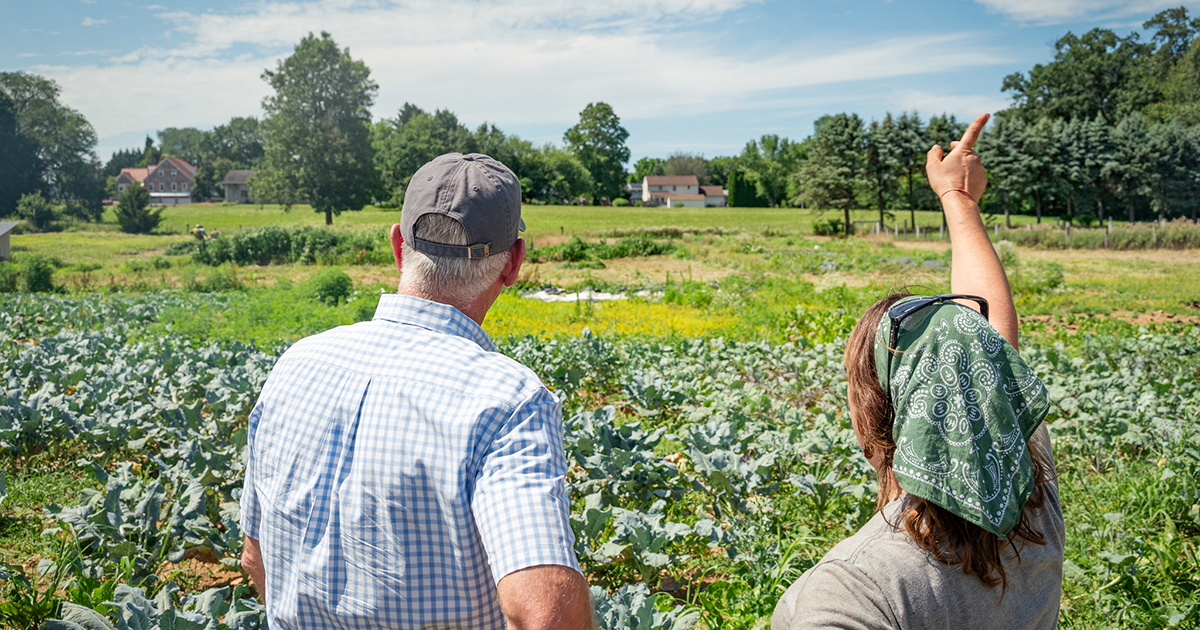
Liz Wagner, ’11, (pictured left) with Pennsylvania Secretary of Agriculture, Russell Redding, who visited Crooked Row in 2025. In 2017, Wagner, and her parents came across a property for sale that had growing space, as well as a storefront. The property was always a farm stand, one that Wagner had visited with her family as a child. They jumped on this chance, purchasing the site and establishing Crooked Row Farm’s second location and market storefront.
After graduating from La Salle University, Liz Wagner, ‘11, used her English and journalism degree in an unusual way. As the owner of Crooked Row Farm in Orefield, PA, she’s utilizing the lessons she learned in and out of the classroom to help her local community.
Growing up in a rural part of the Lehigh Valley, La Salle’s city campus appealed to Wagner, as did the Honors Program. After a visit to campus, which “enraptured” her, she made the decision to become an Explorer, a decision which she’s very grateful for.
More than just the campus and the Honors Program, La Salle’s sense of community made the decision worthwhile and shaped her going forward.
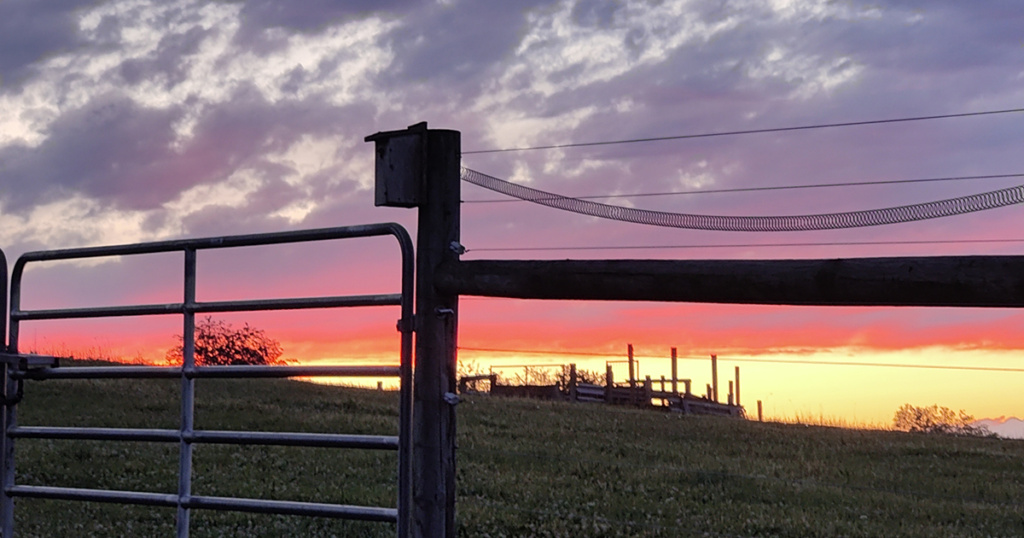
“I loved the community of La Salle,” Wagner said. “It was a lot of that community forward attitude and the idea of being a steward of your community that led me into where I ended up.”
Throughout her time at 20th and Olney, the English and journalism double major was involved with service trips and the student newspaper, the Collegian, as a writer and editor, both highlights of her undergraduate life. She also credits La Salle with making her a better critical thinker and teaching her a lot about communities that she wasn’t aware of growing up.
After graduation, she stayed in Philadelphia for around a year and a half, writing and doing administrative work for the Support Center for Child Advocates, a nonprofit that she had interned with as a student, a job that she would have stayed in if there hadn’t been another possibility there for Wagner.
“My family had been talking all through college about trying to buy a farm, and I felt called to learn how that might work if I were to show up and try to learn how to farm,” Wagner said.
When thinking about her options, Wagner’s time at La Salle had an impact.
“My takeaway from going to a Catholic university like La Salle was being a steward of your community. And for me, that translated to being a steward of the land, learning to take care of your neighbors, learning to take care of the people around you,” she said. “When it came time for me to take this leap, feeding people felt like something very useful I could learn how to do.”
After a lot of conversations with her family, Wagner made the decision to go full time into farming. She was accepted into a program that allowed her to live and work on a farm in New York’s Hudson Valley for a full year, learning all aspects of the trade.
She took that chance and ran with it.
“I woke up one day and it felt right. It felt important. It felt like something I wanted to do,” she said. “I also was excited because I knew it was something I could document as I was doing it for other people.”
In 2013, after she finished that year in the program, Wagner moved back home to the Lehigh Valley and a property her parents had purchased, putting up a small hoop house, a structure that protects plants from extreme weather, and growing her first crop of plants.
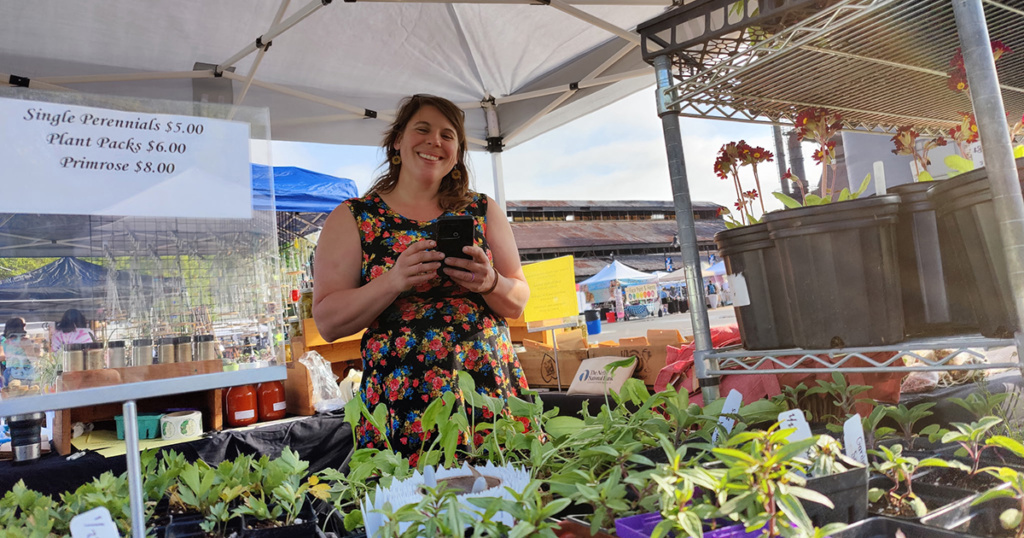
She spent the next few years selling what she grew at farmer’s markets in and around Philadelphia, while building up her skills and growing prowess.
Throughout those early years, and until today, Wagner has still been utilizing the skills she picked up in La Salle’s Communications Program. For the first couple of years, she ran a blog that had “a pretty robust following,” she said. Today, she writes a monthly column in Lancaster Farming, a regional farming newspaper. Her ability to write and communicate with an audience is an unexpected bonus in her career.
“It’s made me pretty competitive in this type of industry because I’m able to kind of tell the story of growing this farm in a way that not everybody can do,” she said.
In 2017, Wagner, and her parents came across a property for sale that had the growing space, as well as a storefront. The property was always a farm stand, one that Wagner had visited with her family as a child. They jumped on this chance, purchasing the site and establishing Crooked Row Farm’s second location and market storefront.
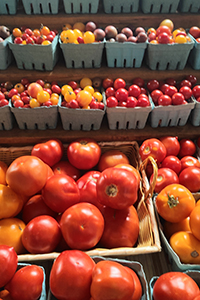
Since then, Wagner has been primarily based at the property where she farms between five and 10 acres a year. Wagner and her team grow mainly vegetables and herbs as well as doing some value-added processing, or turning their vegetables into products like pasta sauce, and on-site small-batch canning.
These products, along with items she’s purchased from other local growers, help keep the market stocked throughout the winter. The outsourcing of items to sell is something that Wagner really leant into during the Covid-19 pandemic, wanting Crooked Row to be a place where those who couldn’t get to their usual selling spots could go.
Her parents are two of the local producers whose products are stocked in the market. They followed Wagner into agriculture, a switch from their careers owning and running an autobody shop which was up the street from Crooked Row, keeping bees and raising American Bison on the property Wagner started on.
When the world settled down and opened back up after the pandemic, Wagner had the opportunity to look at other ways to help her local community and started a partnership with the Lehigh Valley Center for Independent Living. This partnership began as a way for neurodivergent teenagers to come to the farm and pick up work skills either on the land or in the store. It’s grown into a program that happens three times per season where a group will come and spend six to eight weeks working and learning all facets of farming.
“It’s been pretty cool,” Wagner said. “I’ve hired some kids since from that program, or they’re going out into the work force and using me as a recommendation, things like that.”
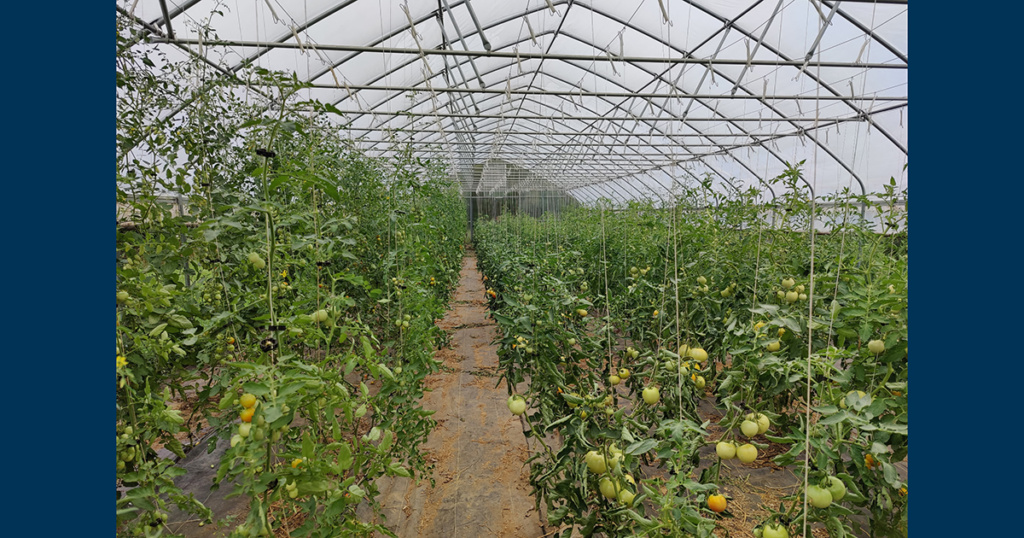
Wagner also does a lot of work around food accessibility, giving to food banks and doing food runs for people who need them, as well as being involved with local committees and programs, like her local Land Preservation Board, that work to create better and more economical farmland and food access. This work goes hand in hand with learning the food processes, the original reason she wanted to become a farmer.
She also values the closeness of the Lehigh Valley farming community. There’s a group of small vegetable growers that lean on each other for support and share resources, something that is “very special” and not seen in all industries, she said.
All these parts of her work, as well as the seasonally changing day-to-day tasks involved with running an organic farm, are worth it for Wagner; she doesn’t regret the decision to leave the city and her office job.
“It’s the only thing that’s ever made sense to me. The second I started doing this stuff, every other part of my life clicked into place,” she said. “There’s things that are challenging, but the growing food and the sharing food and the talking to people about a cleaner eating lifestyle has been really profoundly satisfying.”
Another perk for Wagner, who sees food as a unifier, is her customers bringing food they’ve made with Crooked Row products to the farm for her to taste. It makes her reflect on the base purpose of her livelihood.
“It’s a really unique career where you get to plant a seed in the ground and then follow its entire fruition to where you are harvesting it and handing it to someone,” she said. “Something about growing something somebody is going to eat feels very profound and important and makes me feel like I need to be paying a lot of attention and being very responsible for the vegetables in my care.”
Learn more about Crooked Row Farm, the market, and Liz Wagner’s journey here.
–Naomi Thomas