La Salle University



Why Study Artificial Intelligence at La Salle?
This program provides comprehensive coverage of AI concepts, beginning with a general ‘artificial intelligence’ course that introduces students to the subject, then moving on to methodologies, and tools, equipping students with a deeper understanding of the field. In these AI-focused courses, students develop skills in machine learning, deep learning, natural language processing, and data analytics. The program provides the chance to engage in emerging technologies linked to innovation and advancements in many areas.
Students in this program will understand specific architectures used to develop AI tools and models. They will be equipped with increasingly valuable AI skills that are transferable across many industries. The strong understanding of AI principles allows students to consider diverse career paths that incorporate problem-solving, critical thinking, and data analysis. Students will approach complex challenges with varying views and solutions.
La Salle Technology programs are ranked 71st by U.S. News nationally in 2026. Not sure whether your background fits? Email Dr. Yang Wang, the program director, at wang@lasalle.edu to talk through your goals before you apply.
Highlighted Courses
CIS 654: Artificial Intelligence
This course introduces students to the field of artificial intelligence (AI). Students will learn how big data and data mining techniques are utilized by machines to create the AI models used by autonomous aircraft and automobiles, personal assistants, IT security software, fraud investigations and credit bureaus. The course will review the history, present day use, and future of artificial intelligence. Through case studies and current events, students will examine the benefits and risks associated with AI. The course will cover issues related to AI and privacy, ethics, and machine bias. Neuromorphic computing, the Open Neural Network Exchange (ONNX), and data analytics will also be discussed.
AI 656: Deep Learning and Neural Networks
This course provides an in-depth exploration of deep learning, a subset of machine learning that focuses on neural networks with many layers (deep architectures). Students will learn the theory, methodologies, and practical implementations of deep learning model.
BSA 735: Machine Learning with Business Applications
This course covers the fundamentals of machine learning used to solve business problems and improve business decisions through supervised (predictive) and unsupervised (descriptive) methods and applications. The course starts with supervised learning methods, including Linear Regression and Logistic Regression, Decision Trees, Random Forest, Support Vector Machines (SVM), Gradient Boosting Algorithms, and K-Nearest Neighbors (KNN). The course will then focus on unsupervised methods, including K-Means Clustering, Hierarchical Clustering, and dimensionality reduction
Meet the Faculty
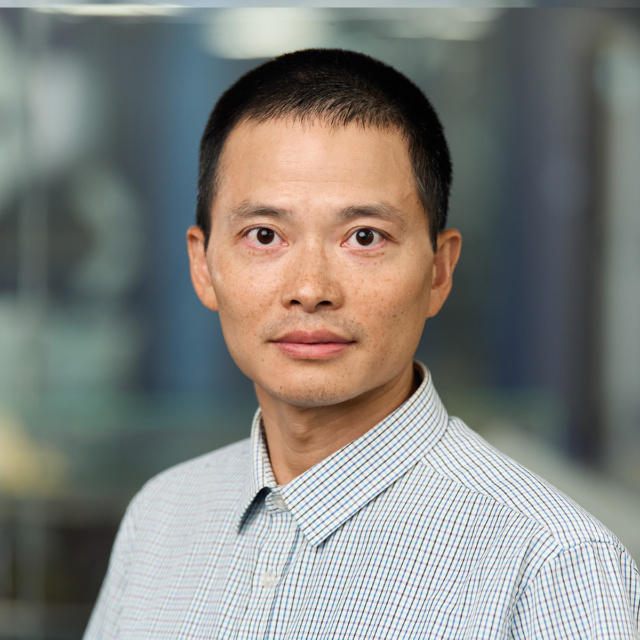
Dr. Yang Wang is a Professor and Director of Graduate Programs in Artificial Intelligence, Cybersecurity, and Computer Information Science at La Salle University. He earned his Ph.D. in Computer Science from Georgia State University in 2012, where he received the Ph.D. Dissertation Grant Award. He taught as an instructor at Georgia State University between 2008 and 2012, and he was recognized by the Outstanding Graduate Teaching Award. Before joining La Salle, he held several industry positions, including senior engineering roles (in networking and Cloud) at Futurewei Technologies and Internap. Dr. Wang has authored about 60 peer-reviewed publications in areas including optical networking, network virtualization, cybersecurity, and pedagogy. His recent scholarly work focuses on generative AI in education and security, as well as AI-driven research on network optimization. He has secured many external/internal grants to support his teaching and research, including internal REU grants for undergraduate research, a CDRD grant for community-based research to develop a gamified/AI-infused youth mental health learning platform, and a recent STEM Education Grant from Triumph Foundation. He actively serves on technical committees for IEEE and ACM conferences, and he was recognized as an Exemplary Reviewer by the IEEE Communications Society in both 2014 and 2017. Dr. Wang also served as an NSF panelist, and he is an Associate Editor of Decision Analytics Journal and Editorial Board Member for Journal of Telecommunication and Information Technologies.
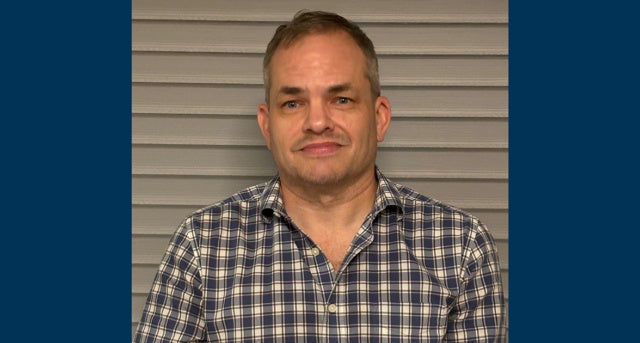
La Salle University’s online Artificial Intelligence M.S. Program has helped Deron Ruby, M.S ‘03, M.S. ‘28, understand the developing technology and how to utilize it in his career.
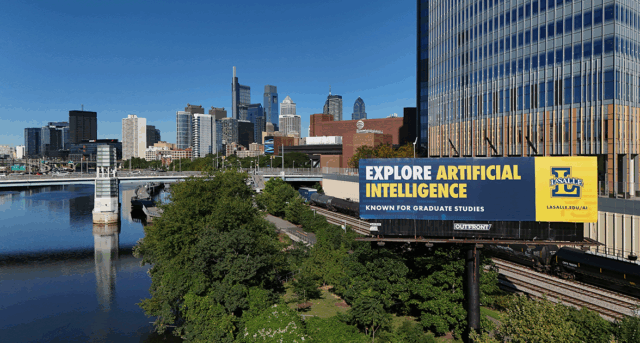
La Salle’s new master’s degree in artificial intelligence coincides with a growing industry in Philadelphia and beyond.