Psychology is a science that seeks to understand and describe human behavior and relationships. Students in this major will continuously build their awareness of the needs of our diverse society, the role that research plays in deepening our understanding of life, and the ways in which the profession of psychology serves to improve the human condition through ethical research, practice, and application.
Every psychology major graduates with hands-on experience, not just classroom knowledge. In your required courses, you will learn how to design and conduct your own original research study, putting your skills into practice. Many students take their experience even further by collaborating on faculty research projects for academic credit or gaining real-world experience through internships in clinics, research labs, schools, and community organizations.
Not sure if psychology is the right path for you? Reach out to Dr. McMonigle at mcmonigl@lasalle.edu. She’d love to hear from you, answer your questions, help you think through your options, and connect you with a current student who can share what it’s really like majoring in psychology at La Salle.
When you study in the Department of Psychology at La Salle University, you gain more than career preparation—you become part of a dynamic learning community dedicated to advancing the science and practice of psychology. As an undergraduate, you’ll learn alongside a department that educates master’s-level and doctoral-level clinicians through La Salle’s nationally recognized Psy.D. in Clinical Psychology and M.A. in Professional Clinical Counseling programs. This unique environment provides opportunities to collaborate on research with advanced graduate students and faculty, enriching your academic experience and preparing you for success in a wide range of careers and graduate programs.
Psychology at La Salle is small enough that your professors and advisors know you and what you want to do. Students here work in faculty research labs, present at regional conferences, and find that the person who taught their first psychology courses are often the one who writes their graduate school recommendations.
Ever wonder what makes a workplace a great place to be? In this course, you’ll discover how psychology helps companies hire the right people, build strong leaders, keep employees motivated, and create positive work environments. You’ll also explore what makes people enjoy their jobs and how organizations can help both employees and businesses succeed.
What happens when psychology meets the criminal justice system? Explore how police investigations use psychological principles, how expert witnesses help courts understand human behavior, and both the strengths and limitations of psychology in the justice process.
Discover what drives athletes to perform at their best. In this course, you will explore the fascinating world of sport psychology and learn how mindset, motivation, confidence, teamwork, and mental skills can shape athletic performance. You will examine the challenges athletes and teams face, discover strategies that help them succeed, and practice thinking like a sport psychologist by analyzing real-world situations and presenting solutions. Whether you’re an athlete, a sports fan, or simply curious about human performance, this course offers a fresh perspective on the psychological side of sports.
Our Psychology Department focuses on training students in scientific thinking that can be applied to a wide variety of topics. This allows for a flexible skill set that can be applied to many settings, and allows students to adapt to the ever-changing job market. The breadth of the faculty expertise allows students with career uncertainty to explore many aspects of the field.
Our graduates have utilized the program to their full advantage, and find themselves working for noteworthy employers such as:
Our students gain hands-on experience through internships, of their choice, that align with their career goals. Recent placements include community mental health facilities, research labs, university counseling centers, schools, and child and family agencies. Graduates have gone on to launch successful careers at leading organizations such as NIH and Children’s Hospital of Philadelphia.
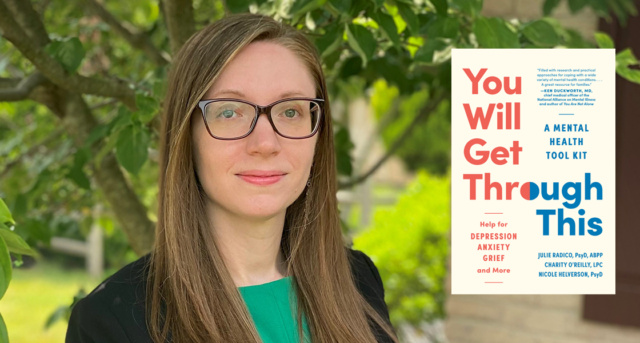
There is a growing need for access to mental healthcare in the U.S. With a shortage of healthcare professionals that leads to long wait times, Julie Radico, Psy.D., ABPP, ’06, is hoping her new book will give individuals access to self-help techniques.
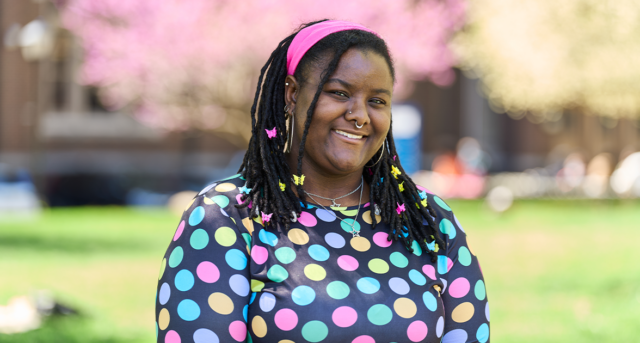
Ivy-yon Jackson, ’24, is a psychology and sociology major with a minor in criminal justice at La Salle.

Tatiana Guevara, ’22, is studying industrial-organizational psychology.