La Salle University




Why Study Computer Information Science at La Salle?
Our program emphasizes teamwork, presentation skills, and collaboration through technology. Students complete hands-on coursework and a capstone project, preparing students for successful careers in a rapidly growing field. Examples of capstone projects include development and implementation of software and research on emerging trends in software application development.
La Salle Technology programs are ranked 71st by U.S. News nationally in 2026. Not sure whether your background fits? Email Dr. Yang Wang, the program director, at wang@lasalle.edu to talk through your goals before you apply.
Highlighted Courses
CIS 621: Client Interface Development
This course addresses the design and development of standards-based client interfaces for Web applications. The course includes Web-based standards and tool sets that support these standards. Application development emphasizes client Web interface scripting to serve as a general introduction to computer programming. The specific tool set used will depend on the types of interfaces to be developed, considering technology trends. Examples of possible tools include XHTML, CSS, and JavaScript. This course may be waived if the student has prior experience in client interface development.
CIS 626: Web Services Development
This course focuses on the development of Web services for use by various Web applications. The course develops basic programming techniques to implement the server side function of the application and uses a non-Windows interface for the tools set.
CIS 629: Mobile Development
This course covers development of mobile applications and integration with existing systems on the devices. Students will extend development of mobile solutions with enhancements to views, layouts, and intents, including interaction with the location-based services, messaging services, multimedia interfaces, and sensors available on the mobile device. The applications will manage data sources, both locally and from database providers and will be tested in an emulation environment and prepared for deployment in a mobile marketplace.
Meet the Faculty
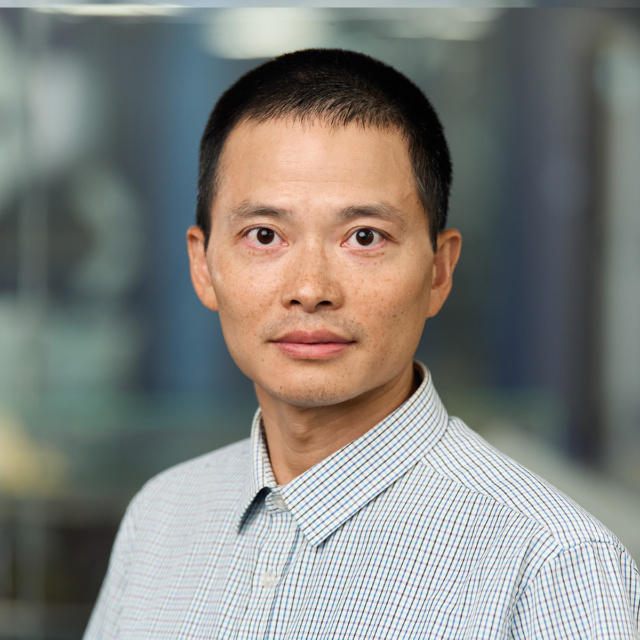
Dr. Yang Wang is a Professor and Director of Graduate Programs in Artificial Intelligence, Cybersecurity, and Computer Information Science at La Salle University. He earned his Ph.D. in Computer Science from Georgia State University in 2012, where he received the Ph.D. Dissertation Grant Award. He taught as an instructor at Georgia State University between 2008 and 2012, and he was recognized by the Outstanding Graduate Teaching Award. Before joining La Salle, he held several industry positions, including senior engineering roles (in networking and Cloud) at Futurewei Technologies and Internap. Dr. Wang has authored about 60 peer-reviewed publications in areas including optical networking, network virtualization, cybersecurity, and pedagogy. His recent scholarly work focuses on generative AI in education and security, as well as AI-driven research on network optimization. He has secured many external/internal grants to support his teaching and research, including internal REU grants for undergraduate research, a CDRD grant for community-based research to develop a gamified/AI-infused youth mental health learning platform, and a recent STEM Education Grant from Triumph Foundation. He actively serves on technical committees for IEEE and ACM conferences, and he was recognized as an Exemplary Reviewer by the IEEE Communications Society in both 2014 and 2017. Dr. Wang also served as an NSF panelist, and he is an Associate Editor of Decision Analytics Journal and Editorial Board Member for Journal of Telecommunication and Information Technologies.