La Salle University
Yang Wang, Ph.D.
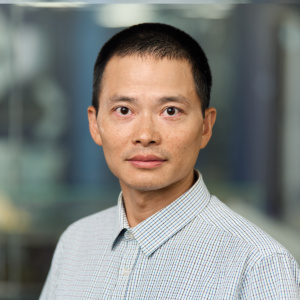
Dr. Yang Wang is a Professor and Director of Graduate Programs in Artificial Intelligence, Cybersecurity, and Computer Information Science at La Salle University. He earned his Ph.D. in Computer Science from Georgia State University in 2012, where he received the Ph.D. Dissertation Grant Award. He taught as an instructor at Georgia State University between 2008 and 2012, and he was recognized by the Outstanding Graduate Teaching Award. Before joining La Salle, he held several industry positions, including senior engineering roles (in networking and Cloud) at Futurewei Technologies and Internap. Dr. Wang has authored about 60 peer-reviewed publications in areas including optical networking, network virtualization, cybersecurity, and pedagogy. His recent scholarly work focuses on generative AI in education and security, as well as AI-driven research on network optimization. He has secured many external/internal grants to support his teaching and research, including internal REU grants for undergraduate research, a CDRD grant for community-based research to develop a gamified/AI-infused youth mental health learning platform, and a recent STEM Education Grant from Triumph Foundation. He actively serves on technical committees for IEEE and ACM conferences, and he was recognized as an Exemplary Reviewer by the IEEE Communications Society in both 2014 and 2017. Dr. Wang also served as an NSF panelist, and he is an Associate Editor of Decision Analytics Journal and Editorial Board Member for Journal of Telecommunication and Information Technologies.
Recent Publications
- Y. Wang, Y. Yin, and M. Jalalitabar, “Development of AI Policies: A Classified Methodological Framework,” in the Proceedings of the IEEE Integrated STEM Education Conference, p. 1-6 (2026)
- Stephen Reilly, Y. Wang, and M.Jalalitabar, “Alpha-SFC: Transformer-Guided Monte Carlo Tree Search with Multi-Path Routing for Online Service Function Chain Embedding,” in the Proceedings of the IEEE CCWC Conference, p.1-7 (2026)
- Y. Wang, Y. Yin, L. Jarvinen and F. Mosca, “AI for Everyone: Building Generative AI Literacy Across Disciplines,” in the Journal of Computing Sciences in Colleges, Vol. 41, Issue 3, p.93-107 (2025)
- Y. Wang and Y. Yin, “Designing a CS0 Programming Course for At Risk Freshmen,” in the Journal of Computing Sciences in Colleges, Vol.40, No.8, p.107-117 (2025)
- Y. Wang, K. Beideman, M.McCoey, and M. Jalalitabar, “Empowering Ethical Hacking Education with Generative AIs: A ChatGPT-Infused Curriculum,” in the Proceedings of the IEEE Integrated STEM Education Conference. p.1–7 (2025)
- Y. Wang, M.McCoey, Q. Hu, and M.Jalalitabar, “Teaching Security in the Era of Generative AI: A Course Design of Security + ChatGPT,” in the Proceedings of the IEEE Integrated STEM Education Conference. p.1–6 (2024)
- Y. Wang, Q. Hu, L. Nguyen and M. Jalalitabar, “Minimum-Cost Embedding of Virtual Networks: An Iterative Decomposition Approach,” in the Elsevier Journal of Computer Networks, Vol. 234, p. 109907 (2023)
- Y. Wang, L. Nguyen, and Q. Hu, “Network Function Virtualization in Elastic Optical Networks,” in the IEEE/OSA Journal of Lightwave Technology, Vol.41, Issue. 16, p.5183-5192, doi: 10.1109/JLT.2023.3260623 (2023)
- Y. Wang, M.Jalalitabar, and J. Fierson, “Summer Research with Undergraduate Students: A Multi-Thread Design,” in the Proceedings of the 23rd ACM Annual Conference on Information Technology Education (ACM-SIGITE ’22). p.57–62 (2022)
- Y. Wang, Q. Hu, C. Li, J. Flor, and M. Jalalitabar, “Node Re-Visitation in Virtual Service Mapping: An Integrated Approach,” in the Proceedings of the IEEE/CIC ICCC Conference, p. 1-6 (2021)
- Y. Wang, and Q. Hu, “A Path Growing Approach to Optical Virtual Network Embedding in SLICE Networks,” in the IEEE/OSA Journal of Lightwave Technology, Vol.39, No.8, p.2253-2262 (2021)
- Y. Wang, P. McCoey and Q. Hu, “Developing an Undergraduate Course Curriculum for Ethical Hacking,” in the Proceedings of the 21st ACM Conference on SIG-Information Technology Education (ACM-SIGITE), p. 330-335 (2020)
Areas of Expertise
- Computer Networks
- Cybersecurity
- Artificial Intelligence
Education
- Ph.D., Computer Science, Georgia State University, 2012
- M.S., Computer Science, Georgia State University, 2011
- M.E., Computer Science and Technology, Beijing University of Posts and Telecommunications, 2007
- B.E., Computer Science and Technology, Anhui Normal University, 2004
Teaching
- AI 620 AI Frameworks and Compliance (new)
- AI for All: From Prompt Engineering to Real-World Applications (new)
- CSC 15x Introduction to Computing using AI (new)
- CSC 171 Introduction to Programming (with Game and Robot Programming)
- CSC 151 Introduction to Computing using Packages
- CSC 154 HealthCare Informatics
- CSIT 220 Data Communications
- CSC 230 Programming Concepts and User Interfaces
- CSC 240 Database Management Systems
- CSC 280 Object Programming
- CSC 290 Introduction to Data Structures and Algorithms
- CSIT 320 LANs and Network Administration
- CSIT 422 Information Security
- CSIT 423 Penetration Testing
- CYB 668 Computer and Network Security
Presentations
- Philly Magazine Interview on AI
- “Code, Camera, Action: Deploying AI from Scratch,” Blue and Gold Day Technical Session Training Workshop, March 31, 2026
- “Development of AI Policies: A Classified Methodological Framework,” IEEE Integrated STEM Education Conference, March 14, 2026
- “Mini-game from Scratch: Developing a Game in the Scratch Programming Language,” Blue and Gold Day Workshop, April 12, 2025
- Panelist, PA Networking User Group (NUG) Philadelphia Winter Event 2025, March 19, 2025
- “Intervening with At-risk Freshmen in Programming-Methodologies and Designs,” IEEE Integrated STEM Education Conference, March 2025
- “Revamping the CS Curriculum with AI,” La Salle University AI Spring Course Preparation Workshop, January 7, 2025
- “Prompt Engineering – The Arts and Sciences of Talking to AI,” La Salle University AI Spring Course Preparation Workshop, January 7, 2025
- “Prompt Engineering – Techniques and Use Cases,” La Salle University AI in Practice for Teaching and Learning Workshop, November 13, 2024
- “Teaching Programming Concepts with Visualization: a Systematic Overview and Lessons Learned,” IEEE Integrated STEM Education Conference, March 2024
- “Teaching CUDA Programming at La Salle,” NSF Faculty Training Workshop for Teaching Heterogeneous Computing (Hosted by Texas State University), January 2023
- “Node Re-Visitation in Virtual Service Mapping: An Integrated Approach,” IEEE/CIC ICCC Conference, July 2021